

Why Your Wallet Choice Matters More Than You Think
Most people spend a lot of time choosing which cryptocurrency to invest in – and almost no time thinking about where they’ll store it. That’s a problem. In crypto, if you lose access to your wallet, your funds are gone. If someone else gets in, they’re gone too. The hot wallet vs cold wallet question is really a question about how much risk you’re willing to take with your own money.
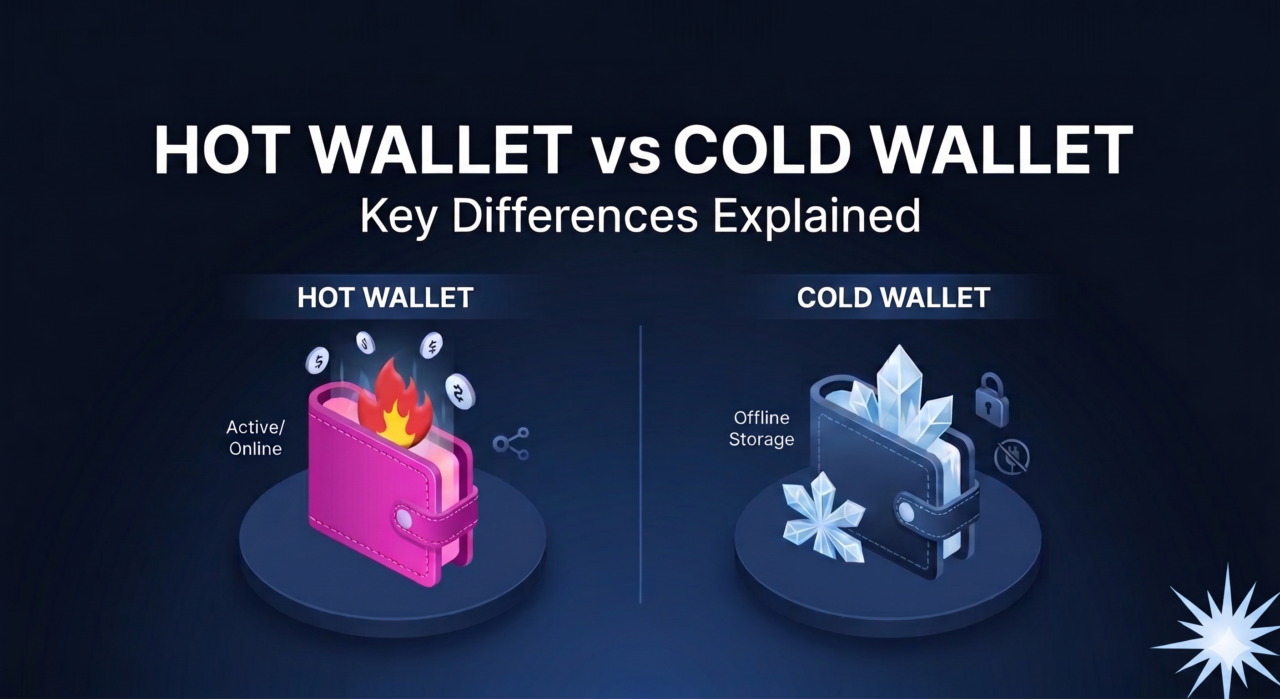
Users can access their cryptocurrency through a hot wallet which provides instant trading capabilities because it maintains an active internet connection. A cold wallet is stored offline which makes it more secure against attacks although its contents take longer to retrieve. Neither option provides superior performance to the other. Your cryptocurrency spending habits and your total amount of digital assets will determine the proper settings to use. The guide explains hot and cold wallet differences and describes which wallet to use in different situations while providing guidance on building an appropriate strategy for your particular needs.
What Is a Hot Wallet?
A hot wallet is any cryptocurrency wallet that stays connected to the internet. The category includes software wallets which users can access through MetaMask and mobile applications and through integrated wallets available on cryptocurrency exchanges. Hot wallets enable instant transactions because their constant internet connection allows users to send and receive and trade within seconds.
Exchange wallets – like the one you get when you sign up on BTZO – are a common type of hot wallet. They’re custodial, meaning the exchange holds your private keys on your behalf. They’re convenient for active trading but come with trade-offs on the security side.
| Advantages of Hot Wallets | Disadvantages of Hot Wallets |
|---|---|
| Always accessible - trade or send instantly | Constantly connected = larger attack surface |
| Easy to set up, no hardware required | Vulnerable to phishing, malware, and exchange hacks |
| Ideal for frequent traders and daily use | Not recommended for storing large amounts long-term |
| Seamlessly integrates with exchanges and dApps | Custodial wallets put key control in the exchange's hands |
What Is a Cold Wallet?
A cold wallet stores your private keys completely offline – disconnected from the internet at all times. Hardware wallets like Ledger and Trezor are the most common form: physical devices that hold your keys and require physical confirmation to sign any transaction. Paper wallets – where you print or write down your keys – are another form, though rarely used today.
The remote hackers lack access to the cold wallet because it operates without any active internet connection. Your cold wallet keys stay protected from hacker access even when your computer gets hacked as long as you keep the physical device secure. This makes cold storage the gold standard for protecting large holdings or crypto you don’t plan to move frequently.
| Advantages of Cold Wallets | Disadvantages of Cold Wallets |
|---|---|
| Private keys are never exposed to the internet | Less convenient - requires extra steps to access funds |
| Immune to remote hacks, malware, and phishing | Hardware devices cost money (typically $50–$200+) |
| Ideal for long-term holding and large amounts | Physical loss or damage can lead to permanent loss if no backup |
| You maintain full control of your private keys | Not practical for frequent, daily trading activity |
Hot Wallet vs Cold Wallet – Key Differences at a Glance
| Factor | Hot Wallet | Cold Wallet |
|---|---|---|
| Internet connection | Always connected | Always offline |
| Security level | Moderate - attack surface exists | High - no remote access possible |
| Convenience | Very high - instant access | Lower - requires physical device |
| Best use case | Active trading, small balances | Long-term storage, large holdings |
| Key custody | Can be custodial or self-custodial | Always self-custodial |
| Cost | Free (software/exchange wallet) | $50–$200+ for hardware device |
| Risk profile | Higher - suited for smaller amounts | Lower - suited for significant value |
| Setup complexity | Minimal - sign up or download app | Moderate - requires hardware setup |
The difference between hot and cold wallet isn’t about which is better overall – it’s about matching the right tool to the right job. Most serious investors use both.
Choosing the Right Wallet Strategy
The most practical approach isn’t choosing one over the other – it’s using both together. You should manage your funds like cash because you need to have enough money for your daily expenses while keeping the rest of your money in a protected account.
The way hot wallets and cold wallets work in cryptocurrency requires users to maintain only their trading needs in a hot wallet. The user must keep most of their cryptocurrency holdings in a cold wallet which they should access only for specific times.
Ask yourself these questions before deciding:
- How often do I trade? Daily traders need hot wallet access. Long-term holders can afford the friction of cold storage.
- How much am I holding? Small amounts for trading are fine in a hot wallet. Significant sums deserve cold storage.
- What is my risk tolerance? If losing access to your crypto would be financially devastating, cold storage isn’t optional – it’s essential.
- Am I using an exchange wallet? Custodial wallets are convenient but remember not your keys, not your coins. For anything beyond active trading, consider a self-custodial option.
Common Mistakes to Avoid
Even investors who understand the difference between hot and cold wallets still make avoidable errors. These are the ones that come up most often:
- Leaving large amounts in a hot wallet long-term. Exchange wallets are built for trading, not storage. If an exchange is compromised, custodial wallets are at risk. Move significant holdings to cold storage.
- Ignoring software updates and security features. Malicious actors find it simpler to exploit software that has reached its end of life. Users should maintain their systems up to date while utilizing two-factor authentication systems which become available to them.
- Sharing private keys or seed phrases. Your seed phrase is the master key to your wallet. No legitimate platform or support team will ever ask for it. Anyone who does is attempting to steal your funds.
- Not backing up recovery phrases. You need to store your seed phrase in physical form through writing it on paper and keeping it in a secure area that does not connect to the internet. The permanent loss of your seed phrase leads to permanent loss of access.
- Using public Wi-Fi with hot wallets. Public networks can be monitored. Never access your crypto wallet, approve transactions, or log in to an exchange on unsecured public internet.
Conclusion: Hot Wallet vs Cold Wallet
The hot wallet vs cold wallet debate doesn’t have a single winner – it has a right answer for each situation. Hot wallets are essential for anyone actively trading or using DeFi. Cold wallets are essential for anyone holding meaningful value over the long term. The investors who get this right tend to use both.
If you’re just getting started, open a secure exchange account on a platform like BTZO Global for your active trading – it gives you a well-protected hot wallet environment with 2FA, secure infrastructure, and tools for every level. As your holdings grow, add cold storage to protect what you don’t need to touch daily.
Understanding how wallets work is one of the most fundamental parts of staying safe in crypto. The tools are simple. The habits they require are the part that takes practice – but once they’re in place, you’ll be in a far stronger position than most people in this space.
Ready to put your strategy into practice? Sign up on BTZO Global or Get a BTZO App – a secure global exchange with spot trading, futures trading, AutoTrader, earn, and no-KYC onboarding – and start trading with confidence today.
FAQs – Hot wallet vs cold wallet
- What is the main difference between a hot wallet and a cold wallet?
The core difference between these two things shows itself through their internet connectivity. The hot wallet maintains internet connection for quick transaction processing while exposing users to online security threats. The cold wallet keeps private keys secure through complete offline storage which prevents remote access. Hot wallets suit active trading, while cold wallets are better for long-term storage.
- Is an exchange wallet a hot wallet?
Yes. When you deposit crypto to an exchange like BTZO wallet, funds are stored in a custodial hot wallet managed by the platform. This is convenient for trading but means the exchange controls the private keys. For long-term storage of large amounts, self-custodial cold storage is safer.
- Can I use both a hot wallet and a cold wallet at the same time?
Yes – this is commonly recommended. Use a hot wallet for actively traded funds and keep the majority in cold storage for stronger protection. Many investors keep a small percentage accessible and the rest offline.
- What happens if I lose my cold wallet device?
You can recover your wallet on a new device because your 12 or 24-word seed phrase allows access to your funds after losing your device. The crypto becomes permanently inaccessible when both the device and the seed phrase are missing.