

Introduction
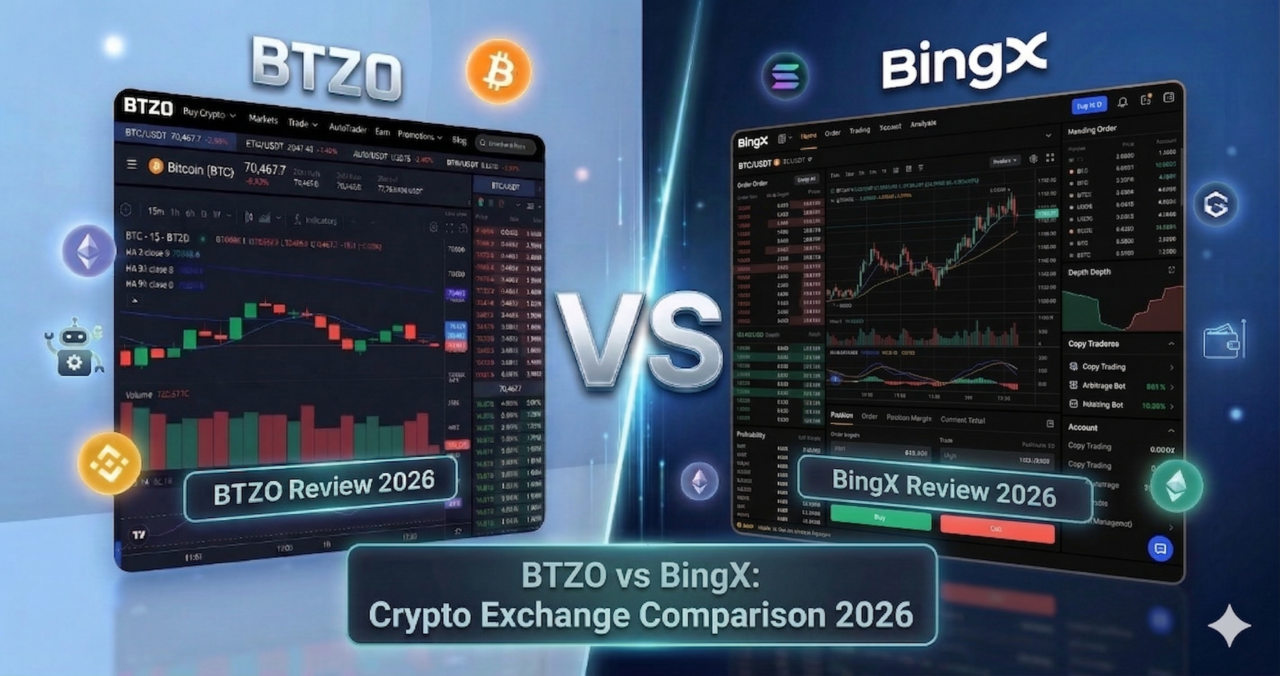
Choosing the right crypto exchange can be the difference between success and failure in your trading journey. With the sheer number of choices available, it’s not hard to get caught up in the hype of low fees, cool features, and robust security. Two exchanges that have been making waves in 2026 are BTZO and BingX – and for good reason.
In this BTZO vs BingX review, we’ll walk you through all the key areas that matter, from trading options to fees, usability, and security. Whether you’re a complete trading newbie or a seasoned pro looking to switch to a new exchange, this review will help you make the right choice for your needs.
Spoiler: BTZO punches well above its weight. Let’s find out why.
Platform Overview
What is BTZO?
BTZO is a global cryptocurrency exchange built for traders of all levels. It offers a clean, no-KYC onboarding experience, which means you can sign up and start trading in minutes – no lengthy verification required. BTZO crypto exchange covers all the major bases: btzo spot trading, futures trading, automated trading bots, OTC trading, staking and earn, and more. With up to 100x leverage on futures and a suite of smart tools like DCA Bots, Futures Grid Bots, and AutoTrader, BTZO gives you everything you need to trade with confidence.
BTZO is designed to feel simple for beginners while being powerful enough for experienced traders who want customizable charts, advanced order types, and automated strategies.
What is BingX?
BingX is a reputable exchange, established in 2018, and now has more than 20 million users worldwide (see BingX on CoinMarketCap).It is known for its copy trading feature, which enables you to copy trades of successful traders automatically. BingX also offers spot, futures, and grid bot trading, as well as wealth management products and a demo trading account.
But BingX does have some drawbacks. It is KYC (Know Your Customer) verified for transactions involving fiat money and also has withdrawal limits for unverified accounts. It also had a major security breach in September 2024 when hackers managed to access its hot wallets. Although the losses were compensated, it did raise a few concerns about the security of the exchange.
Feature Comparison: BTZO vs BingX at a Glance
Trading Products & Markets
Both BTZO and BingX support the core trading products most traders need. But dig a little deeper and the differences become clear.
BTZO’s trading ecosystem is built around flexibility and automation. You get spot markets and futures markets, OTC trading for large orders without slippage, a Convert feature for instant swaps, and three distinct automated bots: DCA Bot (for systematic investing), Futures Grid Bot (for profiting from volatility with leverage), and AutoTrader (pre-built strategies ideal for beginners). Together, these tools give you a complete trading workflow under one roof.
Also read: A beginner’s guide on DCA Trading Bots – how to automate your crypto investments
BingX’s standout offering is copy trading, which lets beginners follow professional traders. It also supports spot, futures (USDT-margined and coin-margined perpetual contracts), and grid bots. BingX has recently announced an investment of $300 million in AI trading solutions, which indicates its intentions in the automated trading space. However, for now, BTZO’s three-bot lineup – especially the Futures Grid Bot – remains a feature you rarely find on competing platforms.
Winner: BTZO, for its broader automation toolkit and OTC capability. BingX wins specifically for copy trading.
Fees & Pricing – BTZO vs BingX
Trading fees directly affect your profits, especially if you trade frequently. Here’s how BTZO and BingX stack up:
| Fee Type | BTZO | BingX |
|---|---|---|
| Spot Maker Fee | 0.10% | 0.10% |
| Spot Taker Fee | 0.10% | 0.10% |
| Futures Maker Fee | 0.02% | 0.02% |
| Futures Taker Fee | 0.00% | 0.05% |
| Withdrawal Fees | Network-based, transparent | Variable by asset |
| Referral Reward | 25% of referee trading fees | ~20% standard |
| VIP Discounts | Yes | Yes – volume-based tiers |
BTZO trading fees structure rewards loyalty through a transparent VIP tier system – the more you trade, the less you pay. The BTZO referral program at 25% is notably above the industry average, making it attractive if you want to earn passively by recommending the platform to others.
BingX’s base spot fees are 0.10% for both makers and takers, which is in line with the industry average. Futures fees are among the more competitive in the market at 0.02% maker and 0.045% taker. Both platforms keep withdrawal fees transparent and network-based.
Winner: Tie on base fees, but BTZO’s higher referral rewards and VIP program give it an edge for active and community-minded traders.
User Experience & Interface
A crypto exchange is only as good as its usability. Here is what to expect from each of the platforms:
BTZO has a very intuitive interface that is beginner-friendly without being shallow. The interface is customizable, and switching between spot, futures, and bot trading is very smooth. The web terminal supports advanced charting tools, and the mobile app mirrors the full desktop experience – no feature left behind. Signing up takes minutes since there’s no KYC requirement, which is a massive time-saver.
BingX also has a strong UI with a mobile-first design. The app is well-reviewed, especially for beginners using copy trading. It offers a demo trading account, which is useful for practice. However, some users note that the range of products (Shark Fin, BingX Wealth, copy portfolios) can feel overwhelming at first.
Winner: BTZO, for faster onboarding (no KYC), a focused interface, and a more streamlined experience across web and mobile.
In this section you could understand the main idea of the all the situation from the beginning more streamlined across the web application
Security & Compliance
Security is not something that can be compromised when choosing a crypto exchange. This is how both exchanges deal with security:
BTZO is a security-focused exchange with 2FA on withdrawals and sensitive transactions, an anti-phishing code system for authenticating emails, and secure wallet support. There have been no security breaches on the exchange.
BingX has multi-factor authentication, cold storage (90% of assets are offline), ShieldX technology for monitoring hot wallets, bi-weekly proof-of-reserves audits that are third-party verified, and anti-phishing codes. It also has licenses in Australia, the EU, and other countries. However, in September 2024, it was hacked, leading to an estimated $52 million loss in hot wallets. To its credit, BingX did compensate all affected users with funds from its own reserves.
| Security Feature | BTZO | BingX |
|---|---|---|
| 2FA (Mandatory) | ✅ Yes | ✅ Yes |
| Anti-Phishing Code | ✅ Yes | ✅ Yes |
| Cold Storage | ✅ Secure wallet infra | ✅ 90% offline |
| Proof of Reserves | Secure infrastructure | Bi-weekly audited PoR |
| Security Breach History | None reported | ~$52M hack (Sept 2024) |
| KYC Requirement | No KYC needed | Required for fiat/limits |
Winner: BTZO, for its clean security record and no mandatory KYC requirement – meaning your personal data stays private.
Verdict & Recommendation: Which Exchange Is Right for You?
After comparing both platforms across features, fees, UX, and security, here’s our honest take:
For Beginner Traders
BTZO’s no-KYC onboarding and AutoTrader (pre-built strategies) make it the ideal first exchange. You can start trading in minutes without uploading any documents. If you specifically want to copy other traders’ strategies passively, BingX’s copy trading feature is worth considering – but BTZO’s AutoTrader fills a similar role with less complexity.
For High-Frequency Traders
BTZO’s VIP fee tier program and advanced trading terminal make it a strong choice. The ability to run DCA Bots and Futures Grid Bots simultaneously gives you an automated edge without manual intervention. Both platforms offer competitive fees at higher volumes, but BTZO’s toolset is more integrated.
For Security-First Traders
BTZO is the clear winner. No breaches, 2FA requirements, anti-phishing codes, and KYC requirements means your trading and personal information are more secure. BingX has upgraded since its 2024 breach, but for those who value an untarnished security record, BTZO is the better choice.
For Automated Trading
BTZO trading app offers three distinct bots: DCA Bot, Futures Grid Bot, and AutoTrader – each serving a different strategy. BingX offers grid bots and is investing in AI tools, but its automation suite isn’t as mature or diverse yet. For traders who want to set strategies and let them run, BTZO is the better-equipped platform today.
See More Comparisons:
BTZO vs Bybit – Complete Feature Comparison for 2026
BTZO vs Zebpay – Which Crypto Exchange Is Better for Indian Traders?
FAQs – BTZO vs BingX
- Is BTZO better than BingX for beginners?
Yes. BTZO crypto exchange allows instant no-KYC sign-up and offers beginner-friendly AutoTrader strategies. While BingX copy trading is helpful, its wider product range can feel overwhelming. BTZO keeps the experience simple while still supporting growth. - Does BTZO charge lower fees than BingX?
Both platforms offer competitive, volume-based fees. BTZO stands out with a 25% referral reward, higher than BingX’s ~20%, making it more rewarding for active referrers. - Is BTZO safe to use?
Yes. BTZO crypto has 2FA protection, anti-phishing security, and wallet security, and it has not been hacked yet. BingX was hacked in 2024, but the users were compensated. This makes BTZO more secure. - Can I use trading bots on both BTZO and BingX?
Yes, but BTZO trading app offers more options. It includes DCA Bots, Futures Grid Bots, and beginner-friendly AutoTrader strategies. BingX supports grid bots, but BTZO’s automated futures tools give it a clear advantage.